For families of children with disabilities, school-age programs provide structure, services, and support that help students thrive. However, as high school graduation approaches, a new set of questions often arises: What comes next? Understanding what life after school-age programs looks like is critical for preparing both young adults and their families for the future.
Transitioning into adulthood can feel overwhelming, but it also offers opportunities for growth, independence, and fulfillment. Whether the path includes higher education, vocational training, employment, or supported living, planning makes all the difference. This guide explores the key aspects of life after school-age programs, outlining the available resources, important considerations, and strategies that empower young adults with disabilities to take the next steps with confidence.
Key Takeaways:
- IEPs end at graduation or age 22; adult services require new plans and paperwork.
- Key adult services include job coaching, daily living skills, housing, therapy, and social programs.
- Contact state agencies (e.g., DDS offices) early for transition and Medicaid waivers.
- Life skills include self-care, cooking, budgeting, coaching, and tech can help with learning.
- Housing options include supported living, group homes, co-housing, and supervised apartments.
- Adult education includes inclusive college programs, community colleges, job training, and life skills classes.
- Employment options may include supported jobs, internships, or volunteer work with coaching available.
- Day programs support life skills and friendships through structured activities like art and peer time.
- Legal planning may include guardianship, supported decision-making, and special needs trusts.
- SSI, SSDI, and Medicaid benefits are key; early applications and benefits counselors assist.
- Social and emotional growth depends on peer groups, mental health support, and slow, steady shifts.
- Useful tools include advocacy groups (e.g., Leaders for Life), state directories, fairs, and support teams.
Why Planning for Life After School-Age Programs Matters
School-age programs provide a familiar environment where educational, therapeutic, and social supports are built into the daily routine. When these programs come to an end, families often realize how much structure they provided. Without preparation, the sudden transition can leave young adults without access to essential services.
Planning ahead ensures continuity of care and provides access to opportunities that foster independence, skill development, and community participation. Families who take proactive steps early—often beginning as early as age 14 during Individualized Education Program (IEP) transition planning—are better equipped to secure the right resources and create a smoother path forward.
Explore First Step, Inc.’s resources and articles for more information.
Key reasons planning is so important include:
- Continuity of support → Young adults continue to receive therapies, job coaching, or life skills training even after graduation.
- Stronger independence → Planning ahead creates opportunities for self-advocacy, decision-making, and skill-building.
- Reduced family stress → Knowing what comes next relieves uncertainty and allows families to prepare financially, emotionally, and logistically.
- Access to resources → Many adult services have waiting lists; early planning ensures placement before services are urgently needed.
The End of School-Age Programs: What Changes?
When school-based programs conclude, young adults and their families face significant changes. The built-in supports that once came automatically through public schools are no longer guaranteed.
Key changes include:
- End of IEPs → Individualized Education Programs are only available during school years. After graduation or aging out (typically at age 21), families must navigate adult service systems.
- Shift in responsibility → Parents no longer work with school districts but instead coordinate with adult disability service agencies, vocational rehabilitation, and healthcare providers.
- New eligibility requirements → Services are not always automatic; applications, assessments, and qualification criteria determine what supports are available.
- Different schedules → Instead of a school day structure, young adults may attend part-time college classes, day programs, or jobs with more flexible hours.
These changes can be jarring at first. However, with the right planning, life after school-age programs can open doors to personal growth and new opportunities.
Building Independence: Essential Life Skills
A key focus of life after school-age programs is independence. Even small steps toward independence can build confidence and improve quality of life. Life skills training prepares young adults to manage daily living and navigate the wider world.
Core Life Skills to Develop
- Personal care → Dressing, hygiene, and meal preparation.
- Money management → Budgeting, using debit cards, and understanding bills.
- Transportation → Using public transit, arranging rides, or learning to drive if possible.
- Household management → Cleaning, laundry, and basic cooking.
- Time management → Keeping appointments, following schedules, and setting reminders.
Ways to Build These Skills
- Family practice at home → Assigning daily responsibilities and encouraging independence.
- Community programs → Many disability organizations offer workshops in cooking, shopping, and transportation.
- Supported living programs → Housing options often include built-in life skills training.
- Job coaching → Employment settings provide real-world opportunities to practice responsibility and organization.
By focusing on these skills, families can help young adults create a strong foundation for independence, regardless of the specific path they pursue.
Housing Options After School-Age Programs
Where a young adult will live is one of the most important decisions after graduation. Housing options vary widely depending on individual needs, financial resources, and the availability of community supports.
Common Housing Options Include:
- Living at home → Many young adults remain with family while developing skills or saving money.
- Supported living → Apartments or group homes with staff support for daily activities.
- Independent living → For those able to manage their own household with minimal assistance
- Shared housing → Roommate-style arrangements with peers, often supported by case managers.
When exploring housing, families should consider safety, accessibility, financial sustainability, and proximity to community opportunities such as jobs, day programs, and social activities.
Higher Education and Training Opportunities
For some young adults, life after school-age programs includes further education. Community colleges, universities, and vocational training programs increasingly provide inclusive opportunities for students with disabilities.
Options May Include:
- Two-year and four-year colleges with disability support services.
- Vocational training programs focused on trades like culinary arts, technology, or automotive work.
- Continuing education classes for personal enrichment and skill-building.
- Specialized transition programs designed for students with disabilities to explore careers and independent living.
Higher education helps young adults expand academic knowledge, pursue career interests, and engage in meaningful peer relationships. Disability support offices can provide accommodations such as extended testing time, note-taking assistance, or alternative learning formats. Visit our full list of services for more information.
Employment Pathways and Vocational Training
Employment is a central part of adulthood, and preparing for the workforce should begin before graduation. Vocational training and employment programs help young adults with disabilities identify strengths, gain experience, and secure meaningful work.
Employment Options Include:
- Competitive employment → Jobs in the open market with or without accommodations.
- Supported employment → Ongoing job coaching and supports in integrated work settings.
- Customized employment → Tailored job roles that match an individual’s strengths and employer needs.
- Volunteer work or internships → Opportunities to build skills and confidence before entering the workforce.
State vocational rehabilitation (VR) programs provide assessments, training, and job placement services. Partnerships between schools and VR often begin in high school, smoothing the transition into post-school employment.
Day Programs and Community Involvement
For young adults who are not working full-time, day programs provide structure, socialization, and opportunities for continued skill-building. These programs may include recreational activities, volunteer opportunities, and community engagement.
Benefits of day programs include:
- Social connection → Making friends and building relationships outside the family.
- Skill development → Practicing communication, teamwork, and daily living skills.
- Routine → Providing structure similar to the school environment.
- Respite for families → Offering caregivers time to manage work and other responsibilities.
Community involvement also extends beyond formal programs. Joining clubs, attending local events, and volunteering are all ways to encourage participation and build meaningful relationships.
Legal and Financial Planning for the Future
Life after school-age programs requires careful legal and financial planning. Families must consider how to protect benefits, plan for long-term care, and support independence.
Key Planning Areas:
- Guardianship and alternatives → Deciding whether a young adult needs a guardian, power of attorney, or supported decision-making.
- Government benefits → Applying for Supplemental Security Income (SSI), Medicaid, or other supports.
- Special needs trusts → Ensuring financial security without jeopardizing benefits.
- Financial literacy → Teaching money management and helping young adults open bank accounts.
- Future planning → Creating wills, care plans, and designating future caregivers.
Professional guidance from attorneys, financial planners, and disability advocates can make these decisions clearer and more sustainable.
Emotional and Social Considerations
While practical planning is essential, families must also prepare for the emotional side of transition. Leaving the structure of school-age programs can feel isolating for young adults, and families may grieve the end of a familiar chapter.
Strategies to Support Emotional Well-Being:
- Encourage self-advocacy → Allow young adults to express goals and preferences.
- Foster friendships → Support social opportunities through clubs, community events, or online groups.
- Provide counseling → Access mental health services for both young adults and caregivers.
- Celebrate milestones → Recognize achievements, whether large or small.
Balancing emotional health with practical planning creates a stronger foundation for successful adulthood.
Resources for Navigating Life After School-Age Programs
Families do not need to navigate this journey alone. Many organizations provide guidance, services, and support to make life after school-age programs a smoother transition.
- State developmental disability agencies for housing, day programs, and case management.
- Vocational Rehabilitation Services for employment supports.
- Centers for Independent Living for advocacy and life skills training.
- Parent Training and Information Centers for transition planning guidance.
- Local nonprofits offering respite care, recreation, and peer support.
Connecting with these resources early can reduce wait times and ensure consistent support.
Creating a Bright Future After School-Age Programs at First Step, Inc.
Life after school-age programs represents a new beginning. While the transition may feel overwhelming, careful planning ensures that young adults with disabilities continue to thrive. Whether the next step involves higher education, employment, supported living, or community programs, the goal remains the same: helping each individual live a fulfilling and independent life.
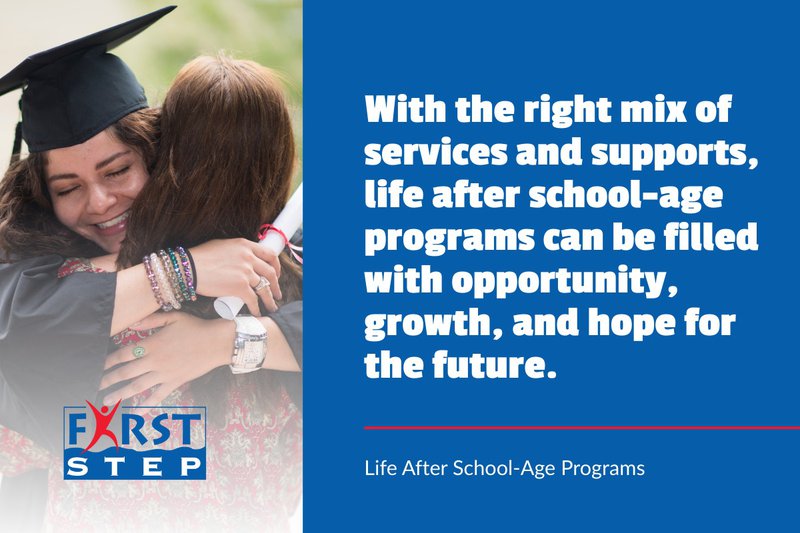
Families who prepare early, explore resources, and support both practical skills and emotional well-being create a foundation for success. With the right mix of services and supports, life after school-age programs can be filled with opportunity, growth, and hope for the future. Contact us today for support with life after school-age programs.
First Step, Inc.
Looking for support for someone you love?
We serve children and adults with developmental disabilities across Hot Springs, Malvern, Fordyce and Glenwood. Tell us what you need and our team will walk you through the options, including the CES Waiver.