
Every parent or caregiver wonders what the future holds for their loved one with a developmental disability. They might ask, "What happens when I can no longer provide daily care?" This concern is valid, but it often overshadows the more exciting possibility that your loved one could build a life of their own. For adults with disabilities, independent living is a journey toward self-determination. It shifts the dynamic from being a passive recipient of care to being an active participant in the community. Whether cooking a simple meal, managing a small budget, or taking public transit to a job, victories like these build a life of dignity, purpose, and joy.
Key Takeaways:
- Independent living prioritizes personal choice and control rather than medical institutionalization.
- Supported living models allow adults to live in their own homes or apartments with staff assistance.
- Key life skills training includes meal preparation, hygiene, and financial management.
- The "Dignity of Risk" is a concept that allows individuals to learn from mistakes safely.
- Medicaid waivers, specifically the CES Waiver, are a primary funding source in Arkansas.
- Community integration reduces isolation and fosters meaningful, natural friendships.
- Legal frameworks like Supported Decision Making offer alternatives to full guardianship.
- Safety technology and smart home modifications make autonomy safer than ever before.
Defining Independent Living for Adults with Disabilities
The term independent living can be misleading. It implies doing everything alone, without help. In the context of developmental disabilities, a clearer description might be "supported independence." It means having the power to make decisions about your own life. It is a philosophy that believes people with disabilities are the best experts on their own needs.
For a long time, society assumed that safety meant total control. This often led to adults living in restrictive institutions where they had no say in what they ate, when they slept, or who they spent time with. Today, the definition has changed. It is about maximizing potential. Instead of refusing help, it means managing your life with the assistance of tools, technology, and support staff.
For one person, independence might mean living in a private apartment with a drop-in aid who visits for two hours a day. For another, it might mean living in a group setting where they choose their roommate and their weekend activities. The common thread is autonomy. The individual is the captain of the ship, even if they need a crew to help sail it.
Independent Living and Self-Determination
At the heart of this housing model is the concept of self-determination. This is the right of all people to control their own lives. When individuals with disabilities have more control over their lives, they are happier, healthier, and more motivated.
Self-determination involves making choices, solving problems, and setting goals. In an independent living environment, staff do not just do things for the resident; they do things with the resident. If a resident wants to cook dinner, the staff member does not just cook it. They help the resident choose a recipe, buy the ingredients, and prepare the meal. This process builds confidence that spills over into other areas of life.
Comparing Housing Models for Adults
Understanding the landscape of housing options is the first step in making a plan. There is no one-size-fits-all solution. The right fit depends on the individual's social needs, medical requirements, and desire for privacy.
| Housing Model |
Description | Level of Support |
|---|---|---|
| Group Homes | Small, shared residences with 24-hour staff support in which residents have private or shared bedrooms but share common areas. |
High: Constantly present staff to assist with medical needs, behavior, and daily tasks |
| Supported Apartments | Residents live in their own apartment (alone or with a roommate). Staff visit at scheduled times or are on-call. |
Medium to Low: Best for individuals who can be safe alone for periods of time |
| Host Homes / Shared Living |
The individual lives with a family or caregiver (not their own parents) who provide support in a natural home setting. |
Varies: Support integrated into family life, offering a highly personalized experience |
| Intentional Communities | Planned neighborhoods designed for neurodiverse adults, offering shared amenities and on-site staff. |
Medium: Offers high social engagement but allows for private living spaces |
Essential Skills for Successful Independent Living
Moving toward independent living requires preparation. Just like anyone else moving out on their own, adults with disabilities need a toolkit of practical skills. This is where providers like First Step play a crucial role, teaching the "how-to" of daily life to ensure long-term stability. At the adult day center, clients are even able to practice these crucial skills in a real-life setting. Including making the bed, cleaning the apartment, doing laundry, and organizing, this model apartment helps prepare clients for successful independent living.
Household Management and Chores
Keeping a clean and safe home is a source of pride. Skills training covers laundry, cleaning, and basic home maintenance. It involves learning how to operate appliances safely, knowing how to plunge a toilet, and understanding when to call a landlord for repairs. It also requires safety drills, such as knowing what to do when a smoke alarm sounds off or how to properly secure doors and windows at night.
Health and Hygiene Routines
Taking care of one’s body is non-negotiable for living alone. Support staff teach routines for bathing, grooming, and dressing. Beyond the basics, individuals learn how to manage their medications. This might involve using automated pill dispensers or smartphone reminders. They also learn how to schedule their own doctor appointments and how to communicate their symptoms to medical professionals.
Financial Literacy and Budgeting
Money management is often a major barrier for families considering this move. Independent living programs teach budgeting basics. This includes understanding the value of money, paying rent on time, and saving for personal wants. When an individual controls their own money, they control their own future. Staff can assist in setting up auto-drafts for bills to prevent missed payments, reducing financial stress.
Transportation and Mobility
A truly independent life implies the ability to leave the house. This makes transportation training vital. This includes learning how to ride public buses, how to use ride-share apps safely, or how to schedule paratransit services. Being able to get to work, the grocery store, or a friend’s house without relying on a caregiver is a massive liberator.
The Concept of "Dignity of Risk" and Independent Living
One of the hardest adjustments for parents is accepting the concept of the "Dignity of Risk." As caregivers, your instinct is to protect. You want to shield your loved one from failure, heartbreak, or bad decisions. However, over-protection can be a form of restriction.
The Dignity of Risk is the idea that self-determination includes the right to make mistakes. It acknowledges that growth often comes from failure. If an adult with a disability spends their whole monthly entertainment budget in one week, they might have a boring three weeks that follow. That is a natural consequence that teaches budgeting better than any lecture could.
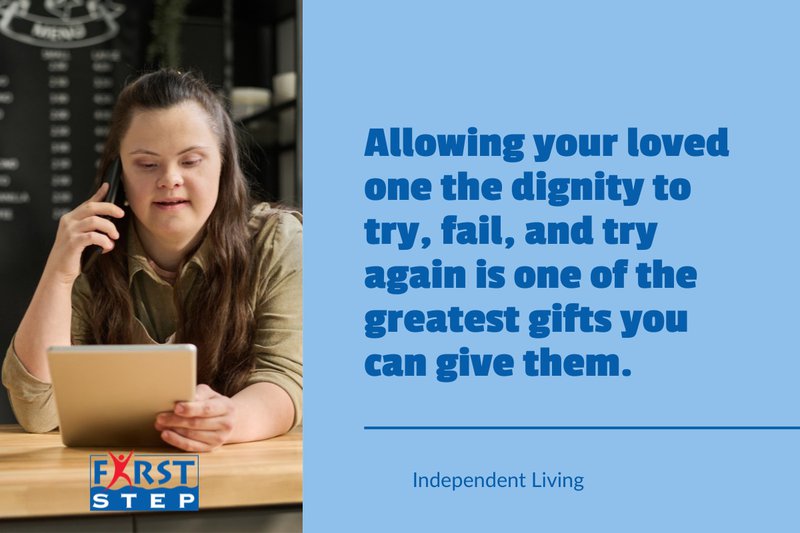
In a supported independent living environment, these risks are managed. There is a safety net. Staff are there to help pick up the pieces and turn the mistake into a learning opportunity rather than a catastrophe. Allowing your loved one the dignity to try, fail, and try again is one of the greatest gifts you can give them.
Overcoming the Fear of Letting Go
The transition to independence is often harder on the parent than the child. You have spent decades being the expert on your child's needs. You know what their different cries mean, what foods they hate, and how to calm them down. Handing that responsibility over to a support team requires immense trust.
It is normal to feel guilt or anxiety. Letting go of some caregiving roles isn’t a bad thing, though; professionals can still provide excellent, compassionate care. Furthermore, stepping back allows your relationship to evolve. You can stop being the case manager and go back to being the parent. You can visit for dinner and just enjoy their company rather than worrying about whether they took their medicine or brushed their teeth.
Strategies for Community Integration
Living alone does not have to mean being lonely. In fact, one of the main goals of independent living is to reduce isolation. When adults live in institutions, their world is very small. When they live in the community, the world opens up.
Supported living programs encourage active participation in local events. This might mean joining an interest-based group like a fitness club or volunteering somewhere like a local animal shelter. These interactions build a network of "natural supports." These are the neighbors, coworkers, and friends who are in the individual's life because they want to be, not because they are paid to be.
Employment is another key factor. Having a job provides a sense of purpose and a built-in social circle. Vocational training helps match individuals with employers who value their skills. Whether it is part-time or full-time work, earning a paycheck boosts confidence and reinforces the skills learned at home.
Financial Resources and Funding Options for Independent Living
One of the biggest questions families ask is how to pay for these arrangements. The cost of independent living can be high, but various programs exist to make it accessible.
Medicaid Waivers
In Arkansas, the Community and Employment Supports (CES) Waiver is a critical resource. This waiver uses Medicaid funds to pay for services in the community rather than in an institution. It covers the cost of direct support professionals who help with daily tasks, transportation, and job coaching. It does not typically pay for rent or food (room and board), but it pays for the services that make living in that room and board possible.
SSI and SSDI
Supplemental Security Income (SSI) and Social Security Disability Insurance (SSDI) provide monthly cash payments to eligible individuals. This money is typically used to cover rent, groceries, and utilities. It is the financial foundation for most adults living independently.
HUD and Housing Vouchers
The U.S. Department of Housing and Urban Development (HUD) offers programs specifically for adults with disabilities, such as the Section 811 program. Additionally, Section eight vouchers can help pay a portion of rent in private apartments. These programs ensure that housing is affordable and meets safety standards, such as having wheelchair ramps or accessible bathrooms.
Legal Considerations: Guardianship and Alternatives
As you plan for independent living, you must also look at the legal framework. For many years, full guardianship was the default option when a child with a disability turned eighteen. While this provides protection, it also strips the individual of many civil rights.
Today, some alternatives align better with the goal of independence.
Supported Decision Making
Supported Decision Making is a legal alternative where the individual retains their rights but chooses a team of trusted advisors (family, friends, professionals) to help them understand information and make decisions. It allows the person to make their own choices regarding healthcare, finance, and living arrangements with support, rather than having a guardian make those choices for them.
Power of Attorney
A Power of Attorney allows a parent or trusted person to act on the individual's behalf in specific areas, such as banking or healthcare, without removing the individual's rights entirely.
It is vital to consult with an attorney who specializes in special needs planning to determine which legal structure best supports your loved one's goals for independence.
Developing a Transition Timeline for Independent Living
Moving out is a major life event. It should not happen overnight. A phased approach helps reduce anxiety and ensures success.
One year before moving:
- Begin discussing the idea of moving out with your loved one.
- Assess their current independent living skills and identify gaps.
- Ensure all funding (Waivers, SSI) is in order.
- Tour different housing providers and neighborhoods.
Six months before moving:
- Increase responsibility at home (e.g., they do their own laundry or cook one meal a week).
- Start gathering necessary household items.
- Select a provider and begin the intake process.
Three months before moving:
- Spend time in the new neighborhood to get familiar with the area.
- Meet potential roommates or staff members.
- Set up a bank account and practice budgeting.
Moving day:
- Keep the move positive and celebratory.
- Set up a schedule for visits and phone calls so they know you are not disappearing.
Future Trends in Adaptive Housing
The landscape of housing is changing. New technology is making it easier for people with complex needs to live on their own. "Smart homes" are no longer just for the tech-savvy; they are vital assistive technology.
Smart devices allow individuals to control lights, thermostats, and locks with their voice or an iPad. This empowers individuals with limited mobility. Remote monitoring systems can alert off-site caregivers if a fall occurs, if a stove is left on, or if a door is opened in the middle of the night.
This technology allows for less intrusive support. Instead of a staff member being in the room twenty-four-seven, help is available at the touch of a button. This respects the individual's privacy while ensuring their safety. As these technologies become more affordable, the possibilities for independent living will continue to expand.
The Role of Centers for Independent Living
The Independent Living Movement has a rich history, pioneered by activists who fought for the idea that disability does not equal brokenness. This movement led to the creation of Centers for Independent Living (CILs).
These are community-based, non-profit organizations that are designed and operated by people with disabilities. There are more than four hundred CILs across the country. They provide core services such as information and referral, skills training, peer counseling, and advocacy. Connecting with a CIL provides emotional support from people who have walked the same path. It is a place to learn advocacy skills and find mentors who prove that a full life is possible.
Start Your Journey to Independence with First Step
Independent living is more than just a housing status; it is a declaration of ability. It affirms that adults with developmental disabilities deserve the same freedom to shape their lives as anyone else. The journey to independent living is filled with growth, challenges, and immense rewards.
With the right planning, solid funding, and a compassionate support team, your loved one can thrive in a home of their own. They can build a life defined not by their limitations, but by their choices.
First Step is dedicated to helping adults with developmental disabilities achieve their highest level of independence. From life skills training to community housing support, we are here to walk this path with you. We understand the fears, and we know the solutions. Contact First Step today to learn more about our adult services and supported living options.
First Step, Inc.
Looking for support for someone you love?
We serve children and adults with developmental disabilities across Hot Springs, Malvern, Fordyce and Glenwood. Tell us what you need and our team will walk you through the options, including the CES Waiver.