If your child has delays or struggles with social or motor skills, you might wonder: is a developmental preschool the right step? Many families in Central Arkansas ask First Step this same question. The truth is, not all preschools are suited for kids who need extra help. Start by understanding what makes a developmental preschool different, and whether it's the right choice for your child.
Key Takeaways:
- Developmental preschools serve children from 18 months to 6 years with delays in speech, motor, cognitive, or social skills
- Quality programs like First Step's Early Intervention Day Treatment (EIDT) include both children with and without disabilities learning together
- Services include speech, occupational, and physical therapy alongside classroom instruction
- Comprehensive programs offer transportation, nutrition services, and family support
- Programs may be offered through public schools or specialized providers like First Step
- Services can be delivered in center-based classrooms, homes, or childcare settings, depending on age
- Many families qualify for no-cost or low-cost services
- Progress is tracked through goals, observations, and regular family communication
What is a Developmental Preschool and Who Does it Serve?
A developmental preschool supports young children with learning or growth delays. These programs help children who need extra help reaching key developmental milestones. Teachers are trained in special education specific to early childhood, and therapists work alongside classroom staff to support each child’s unique needs.
Developmental preschools help children build foundational skills like communication, movement, and independence. They use play, routines, and guided lessons to support each child’s progress. Most activities happen in a group, led by a teacher and an aide.
First Step, Inc.’s approach combines specialized early childhood education with integrated therapy services, creating a supportive environment where every child can thrive.
Developmental Preschool Programs: Who Qualifies
Children qualify if they show delays in areas such as speech and language, motor development, cognitive skills, or social-emotional development. For infants to children 3 years old, early intervention programs provide services. From 18 months through age 6, programs such as First Step's Early Intervention Day Treatment offer comprehensive developmental preschool services.
Eligibility is determined through developmental screenings and evaluations by qualified professionals. These assessments check whether a child's skills match expected milestones for their age. Your child’s therapy team can help you understand the evaluation process and determine if EIDT is the right fit.
Support in Developmental Preschools
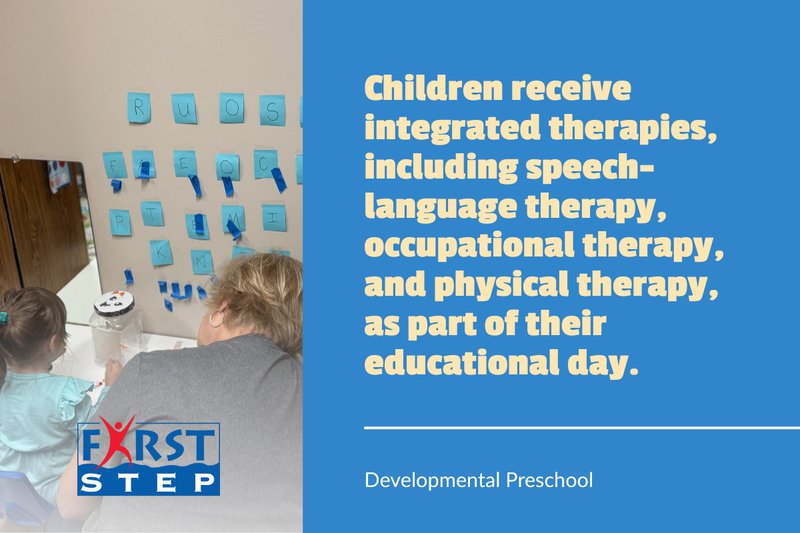
Comprehensive developmental preschool programs like First Step's EIDT offer wraparound services that go beyond classroom instruction. Children receive integrated therapies, including speech-language therapy, occupational therapy, and physical therapy, as part of their educational day.
Speech therapy addresses communication skills, from early sounds and words to social communication and conversation skills. First Step's speech-language pathologists work on helping children express their needs, understand others, and interact with peers throughout the school day.
Occupational therapy helps with fine motor skills, sensory processing, self-care tasks, and play skills. Children learn tasks like holding writing tools, feeding themselves, managing clothing fasteners, and regulating their responses to sensory input.
Physical therapy focuses on gross motor development, strengthening muscles, improving balance and coordination, and building confidence in movement activities like running, climbing, and navigating playground equipment.
Family Support
Beyond therapy services, First Step provides comprehensive family support.
| Service | Description |
|---|---|
| Transportation services | Ensure children can access programming regardless of family circumstances |
| Nutrition services | Include meals and snacks to support healthy development throughout the school day |
| Case management | Helps families navigate resources and connect with community supports across Central Arkansas |
| Family education and training | Empower caregivers to support development at home |
Each First Step classroom includes trained special education teachers and support staff who plan individualized activities and track progress toward goals. This team approach ensures children receive consistent, coordinated support throughout their day.
Key Benefits of Enrolling in Developmental Preschool
A major benefit of developmental preschool is support for your child’s social and emotional growth. Other key benefits include attention and self-regulation skills they can use in kindergarten and beyond.
Social and Emotional Development
One major benefit is support for social and emotional growth in a natural classroom environment. At First Step, children learn to share, take turns, express feelings, and navigate friendships in inclusive classrooms. Daily interactions with peers, both those with and without disabilities, provide authentic opportunities to practice social skills.
Children learn to identify and manage emotions, ask for help when needed, and solve problems with peers. Teachers guide children through conflicts and teach emotional regulation strategies. These skills benefit children well beyond preschool.
School Readiness
Developmental preschools like First Step prepare children for success in kindergarten and beyond. Children build early literacy and math concepts, learn to follow classroom routines, and develop the attention and self-regulation skills needed for formal schooling. They practice foundational skills like sitting for group activities, following multi-step directions, and completing tasks independently.
Developmental preschool curricula are often designed to align with kindergarten expectations, giving children the best possible start when they transition to elementary school.
Inclusive Learning Environment
First Step's EIDT program intentionally includes children with and without disabilities together, creating rich learning environments. Children with delays benefit from observing and interacting with typically developing peers. Children without disabilities develop empathy, patience, and understanding of differences. Research consistently shows that inclusive early childhood programs benefit all children academically and socially, and First Step has built this model into the core of the EIDT program.
How Can Parents Begin the Enrollment Process?
Parents should first look for signs that their child may need help with development. If a child speaks late, avoids play, or struggles with basic skills, this might point to a delay. The good news is, help often starts with a simple check.
Where do you start if you suspect your child needs developmental support?
The first step depends on your child's age:
For children from birth to 3 years: Contact Arkansas's Early Intervention program for a free developmental screening. First Step also provides Early Intervention services that can come to your home or childcare setting.
For children 18 months to 6 years in Central Arkansas: You can contact your local school district to request an evaluation, or reach out directly to First Step to learn about the EIDT program. Many families appreciate having the option to choose a specialized provider like First Step rather than only considering their public school district.
What happens during the evaluation process?
Specialists assess your child's skills across developmental areas, such as communication, motor skills, cognitive abilities, social-emotional development, and adaptive behavior. This comprehensive evaluation determines eligibility and helps identify specific support needs.
If your child qualifies for First Step's EIDT program, the team develops an Individualized Education Program (IEP) outlining goals and services. Parents are equal partners in this process, and First Step's team takes time to ensure families understand and feel comfortable with the plan.
What should families look for in a developmental preschool?
Consider these factors when exploring options:
- Does the program serve an inclusive mix of children with and without disabilities? (First Step does)
- What is the staff-to-child ratio?
- Are therapists integrated into the classroom, or do they pull children out for services? (First Step uses an integrated model)
- Does the program offer transportation and meals? (First Step provides both)
- What family support services are available? (First Step offers case management and family training)
- How does the program communicate with families about progress?
- Where is the program located, and what are the hours?
Many families don't realize they have options beyond their public school district. First Step offers comprehensive developmental preschool programs designed specifically for young children with developmental needs, with multiple locations across Central Arkansas to serve families conveniently.
Is there a cost?
Many families qualify for First Step's services at no cost through public funding sources, including Medicaid and state education funding. Programs like First Step that receive public funding often have no family fee for eligible children. During the enrollment conversation, First Step's team will help families understand payment options, waiver programs, and funding sources; cost should not be a barrier to accessing needed services.
How To Support Early Development at Home
Developmental preschool works best when families and programs partner together. First Step encourages families to extend learning at home with these strategies:
- Use consistent routines. Predictable daily schedules help children feel secure and learn what to expect. Visual schedules with pictures can help children understand routines and transitions.
- Follow through on home activities. First Step teachers may suggest specific activities or strategies to practice at home; even 10-15 minutes daily of focused practice makes a difference in helping your child master new skills.
- Read together daily. Shared reading builds vocabulary, comprehension, and bonding; choose books that match your child's interests and repeat favorites often.
- Encourage play. Provide opportunities for sensory play (water, sand, play dough), pretend play, building with blocks, and outdoor exploration; these activities build cognitive, motor, and social skills.
- Practice real-life skills. Include your child in everyday activities like cooking, cleaning, sorting laundry, and putting away groceries; these tasks build independence, motor skills, and concepts like sorting, counting, and following directions.
- Stay connected with your child's team. Share observations from home with First Step's teachers, ask questions, and attend family events or training sessions; ongoing communication and partnership are vital.
Tracking Progress in Developmental Preschool
You may be wondering how teachers and parents know if a child is learning and improving. There are multiple methods to track a child’s progress, including developmental checklists, IEP-based goals, standardized assessments, work samples, and regular family communication.
- Preschools use developmental checklists for ages 3–5 that record when a child begins using each skill; if a child struggles, they offer help in small, step-by-step ways.
- Observation tools are used to track how a child communicates, plays, and responds; teachers document these moments to understand patterns and guide learning.
- Each child follows goals based on early learning standards; teachers plan group and individual tasks to help the child meet that goal.
Parents receive formal progress reports from First Step several times per year and participate in team meetings to review goals and adjust plans as needed. First Step also provides informal daily updates during drop-off and pick-up, ensuring families always know how their child's day went.
Progress tracking isn't just about documenting what a child can't do; it's about celebrating growth, identifying next steps, and ensuring the developmental preschool meets each child's evolving needs.
Early Support at First Step, Inc.
Developmental preschools provide critical early support that can change the trajectory of a child's development. Quality programs like First Step combine specialized instruction, integrated therapy, inclusive environments, and comprehensive family support to help young children build the skills they need to thrive.
Ready to learn more? First Step, Inc. offers Early Intervention Day Treatment (EIDT) for children in Central Arkansas. Our team is ready to answer your questions, explain the enrollment process, and help you determine if EIDT is the right fit for your child and family.
Contact First Step, Inc. today to schedule a tour, request an evaluation, or simply have a conversation about your child's needs. Every child deserves the best possible start; let us help your family take that important first step.