Finding the right support for your adult child with special needs can be a journey filled with hopes and dreams. You desire not just care, but a nurturing environment that fosters growth, purpose, and joy. That's where special needs adult programs come into play. These programs are designed to empower adults with disabilities, helping them build skills, form meaningful friendships, and embrace independence. Begin by exploring what these programs offer, so you can find the perfect fit for your loved one's unique journey towards a fulfilling life.
Key Takeaways:
- Holistic Support: Adult day programs offer a blend of organized activities, life skills training, and personal care, including hygiene and mobility support.
- Skill Building: Programs focus on essential daily living skills such as grooming, meal preparation, money management, and community safety.
- Customized Care: Services for autism and intellectual disabilities are tailored to the individual’s pace, strengths, and sensory needs.
- Vocational Success: Job coaching and wage-earning opportunities help adults contribute to their community and gain financial independence.
- Financial Aid: Funding options like SSI, SSDI, Medicaid, and specifically Medicaid Waivers help cover the costs of these essential services.
- Community Integration: Social activities, from music to community outings, improve communication, confidence, and emotional well-being.
Defining What Special Needs Adult Programs Are
When school ends, the structure that many families rely on disappears. A special needs adult program fills that gap, offering a structured, supportive environment where learning continues throughout adulthood.
Adult Development Programs
Adult development programs, like those offered at First Step, Inc., provide a full day of organized activities designed to support learning, health, and social interaction. These are not passive environments; they are active hubs of engagement.
Most centers provide a mix of:
- Functional Academics: Continued learning in reading, math, and communication relevant to daily life.
- Physical Activity: Light exercise, movement, and mobility training to maintain physical health.
- Socialization: Group games, holiday parties, and shared meals that foster a sense of belonging.
- Personal Care: Dignified assistance with hygiene, meals, and medication management.
Life Skills and Enrichment: Special Needs Adult Programs
The core of these programs is the development of independent living skills. Adults practice grooming, cooking, shopping, and laundry, tasks that reduce their reliance on caregivers and boost self-esteem.
Social enrichment is equally vital. Activities might include music, arts and crafts, or performance groups. These aren't just "fun" additions; they are therapeutic tools that bring pride and connection. For someone with limited verbal communication, art or music can become a powerful language of expression.
Tailored Support for Diverse Needs
Quality programs recognize that no two individuals are alike. Adults with autism may benefit from strict routines, small groups, and sensory-friendly spaces. Conversely, individuals with intellectual disabilities may require step-by-step, repetitive instruction to master a new task.
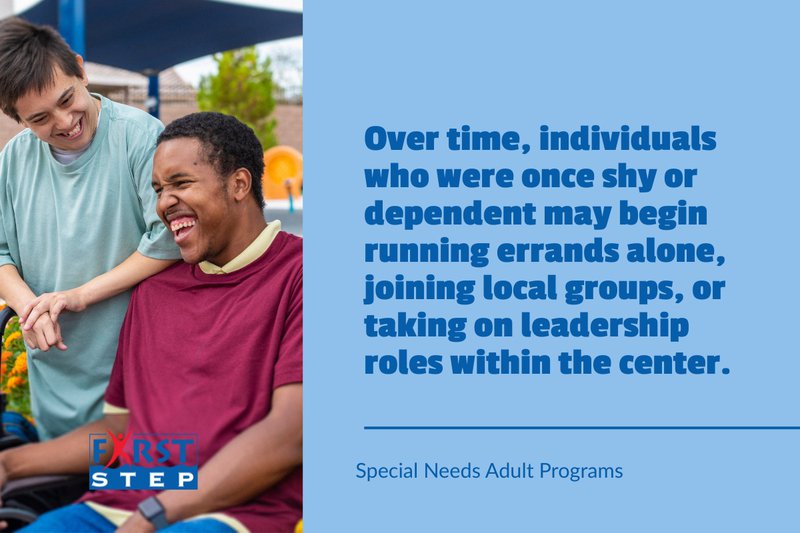
By matching the program’s pace to the person’s comfort level, we see incredible results. Over time, individuals who were once shy or dependent may begin running errands alone, joining local groups, or taking on leadership roles within the center. These successes relieve family stress and build a foundation for a lifetime of growth.
The Role of Vocational Training and Employment
One of the biggest misconceptions about adults with developmental disabilities is that they cannot contribute to the workforce. In reality, with the right support, they are dedicated, hardworking, and valuable employees.
Vocational Training Programs
Special needs adult programs with vocational training teach real-world tasks and professional habits. It starts with identifying the individual's strengths, whether they excel at detailed organization, physical tasks, or social interaction. Training might cover office assistance, food service, assembly, or technical tasks.
At First Step, Inc., we believe in providing wage-earning opportunities. Earning a paycheck, no matter the size, provides a profound sense of accomplishment and autonomy.
Supported Employment and Job Coaching
For many, the bridge to employment is "supported employment." This involves a job coach who helps the adult find a job that matches their skills and provides on-site support.
- Job Prep: Building resumes and practicing interview skills.
- On-the-Job Support: A coach may accompany the individual to work, helping them understand tasks, navigate workplace social dynamics, and use visual guides.
- Fading Support: As the employee gains confidence and competence, the coach’s support gradually fades, allowing the individual to work independently.
These services validate the idea that every person has value to add to their community. Additionally, rehabilitation services paired with this support lead to amazing growth.
Promoting Independent Living
Independence looks different for everyone. For some, it means living in their own apartment; for others, it means being able to make their own snack or dress themselves.
Services that foster self-sufficiency are crucial. This includes training in essential life skills:
| Life Skill | Training Details |
|---|---|
| Home Safety | Understanding emergency procedures and kitchen safety |
| Money Management | Budgeting, recognizing currecy, and making purchases |
| Community Navigation | Learning to use public transportation or specialized transport services |
| Domestic Skills | Practicing cooking, cleaning, and laundry |
The Importance of a Personalized Care Plan
Because needs vary so widely, a "cookie-cutter" approach never works. A personalized care plan is essential. This plan outlines what the individual can do, what specific support is needed, and what goals they are working toward.
This is a collaborative effort. A team, often including case managers, caregivers, family members, and the individual themselves, builds this plan. It tracks health, risks, and progress, ensuring that as the individual grows, the plan evolves with them.
Transportation: Bridging the Gap
One of the most significant barriers to accessing a special needs adult program or maintaining a job is transportation. Many adults with disabilities cannot drive, and public transportation may not be available or accessible in all areas.
Reliable transportation services are often a component of comprehensive adult programs. At First Step, Inc., we understand that getting to and from our centers safely is the first step in participation. Our transportation services ensure that geography does not become a barrier to receiving care, socializing with friends, or getting to work.
Financial Assistance for Special Needs Adult Programs
Navigating the financial landscape of adult care can be daunting, but resources are available to ensure your loved one gets the support they need without financial ruin.
Government Programs
- SSI (Supplemental Security Income): Provides monthly funds for people with disabilities who have low income/resources.
- SSDI (Social Security Disability Insurance): Supports those who have worked ("paid in") but can no longer work due to disability, or adults disabled since childhood whose parents have paid in.
- Medicaid: Covers health care costs and is often the primary funder for adult day services and waiver programs.
The Power of Medicaid Waivers
In many states, including Arkansas, traditional Medicaid pays for medical care, but "Waivers" allow Medicaid funds to be used for home and community-based services.
The CES Waiver (Community and Employment Support) is particularly relevant for the families we serve. It is designed to help individuals with developmental disabilities live in their communities rather than in institutional settings. These waivers can cover:
- Adult development center attendance.
- Supported employment services.
- Respite care for families.
- Specialized medical supplies.
- Adaptive equipment.
First Step, Inc. participates in the Waiver program, allowing eligible individuals to access our comprehensive adult services. We recommend contacting the Department of Human Services (DHS) early, as waiting lists for waivers can be long.
Special Needs Adult Programs Provide Therapeutic Enrichment Opportunities
Quality of life is about more than just survival skills; it is about emotional and physical well-being.
Creative Enrichment
Programs that include art, music, and movement offer therapeutic benefits that standard therapy sometimes cannot reach.
- Music: Singing or playing instruments helps with rhythm, speech, and emotional release.
- Art: Painting or sculpting improves fine motor skills and offers a non-verbal outlet for feelings.
- Movement: Dance or adapted physical education improves coordination and releases stress.
Emotional Support in Special Needs Adult Programs
Adults with special needs may face anxiety, frustration, or dual diagnoses. Mental health support within these programs creates a safe space where feelings are validated. Staff trained in behavioral support can teach coping mechanisms, helping adults manage stress and navigate social conflicts constructively.
When an individual feels emotionally safe and understood, their ability to learn and participate skyrockets.
Community Inclusion and Belonging
Ultimately, the goal of any special needs adult program is inclusion. It is about moving away from isolation and toward a life woven into the fabric of the community.
Community-based programs encourage belonging by taking the "classroom" out into the world. This might look like:
- Volunteering at a local animal shelter or food bank.
- Visiting libraries, parks, and museums.
- Shopping at local grocery stores to practice money skills.
What to Look for in a Program
When you are ready to choose a program, look for an organization that respects the dignity of your loved one.
- Ask: Do they have a personalized plan for each client?
- Observe: Do the staff interact with clients with respect and patience?
- Check: Is the environment clean, safe, and stimulating?
- Verify: Do they offer the specific services you need, such as transportation or waiver acceptance?
At First Step, Inc., we are dedicated to serving adults across Arkansas with the highest standard of care. From wage-earning opportunities to daily life skills training and transportation, we are here to support your family's journey.
Are you looking for a program that sees the potential in your loved one?
Visit our Adult Services page to learn more about our Adult Development Centers, Waiver services, and how we can partner with you to build a brighter, more independent future.